If you have ever wondered why strong grant proposals still get rejected, the answer often has very little to do with writing skill. In many cases, the real issue is grant readiness for nonprofits. Before a proposal is ever scored, funders are quietly evaluating whether an organization is aligned, stable, and capable of delivering results.
Understanding grant readiness for nonprofits changes how you approach funding. It shifts the focus from polishing paragraphs to strengthening infrastructure. And that shift makes all the difference.
What Is Grant Readiness for Nonprofits?
Grant readiness for nonprofits refers to the organizational alignment, program clarity, financial stability, leadership structure, and measurable outcomes required before applying for funding.
It is the foundation that supports a proposal.
When grant readiness is strong, writing becomes easier. When readiness is weak, even beautifully written proposals struggle to compete.
Many organizations focus heavily on grant preparation documents, templates, and deadlines. But funders are evaluating something deeper. They are assessing whether your nonprofit is prepared to responsibly manage their investment.
That assessment often happens before your narrative is read carefully.
Organizational Stability and Grant Readiness for Nonprofits
One of the first things funders look for is stability. This includes reviewing financial statements, budgets, leadership structures, and governance practices. Funders are stewards of limited resources. They are responsible for minimizing risk.
If your financials are inconsistent, your budget does not align with your request, or your documentation raises questions, confidence decreases. This does not mean your mission lacks value. It means your nonprofit grant readiness may need strengthening.
Strong grant readiness for nonprofits includes clear financial systems, updated budgets, defined leadership roles, and internal alignment. These elements communicate competence and responsibility.
Program Clarity Builds Confidence
Funders also evaluate whether your program is clearly defined. Vague language such as “serving the community” or “empowering families” is not enough. Reviewers want specificity.
They want to understand:
-
Who you serve
-
What problem you address
-
How your program operates
-
What measurable change you expect
When programs lack structure or defined outcomes, it signals uncertainty. When programs are clearly articulated and supported by data, confidence rises.
Program clarity is a core component of nonprofit grant readiness because it demonstrates intentional design rather than reactive programming.
Measurable Outcomes Matter More Than Passion
Passion is powerful. Stories are important. But funders prioritize measurable outcomes.
They ask:
What will change because of this grant?
How will success be tracked?
How will impact be reported?
If your nonprofit cannot clearly answer those questions, it suggests gaps in systems and evaluation processes. Grant readiness for nonprofits includes the ability to measure, document, and communicate results.
When outcomes are defined and tracking systems are in place, your proposal feels grounded and credible.
Leadership Alignment Signals Maturity
Funders often detect leadership misalignment through inconsistencies between narrative, budget, and strategy. If goals shift within an application or board involvement appears minimal, it can create hesitation.
Nonprofit grant readiness includes engaged governance, defined board responsibilities, and shared strategic direction. When leadership is aligned, proposals feel cohesive. When alignment is missing, applications feel fragmented.
Maturity shows up in consistency.
Strategic Fit Influences Funding Decisions
Finally, funders evaluate whether your grant request fits within a larger strategic plan. Applications submitted solely because a deadline exists often lack alignment. Reviewers can tell when a proposal feels disconnected from long-term organizational goals.
Strong grant readiness for nonprofits means grants are integrated into your overall strategy. Funding requests support defined objectives rather than chasing opportunity.
Strategic alignment signals sustainability.
An Illustration: The House Before the Paint
Think of grant readiness like building a house.
The proposal is the paint color. It is visible. It matters. But it is not what holds the structure together.
The foundation, framing, electrical systems, and plumbing are less glamorous. They take time. They require planning. But without them, no amount of beautiful paint will keep the house standing.
I often see nonprofits investing heavily in paint while ignoring the foundation. They hire writers, revise language repeatedly, and chase deadlines. Meanwhile, budgets are unclear, outcomes are undefined, and leadership roles are loosely structured.
When you strengthen the foundation first, the rest becomes easier.
Grant readiness for nonprofits is that foundation.
Why Grant Readiness for Nonprofits Matters Before Proposal Review
Most grant rejections occur because something feels uncertain. It may not be obvious. It may not be stated directly in a rejection letter. But reviewers are trained to assess risk.
They evaluate infrastructure, clarity, measurement systems, and alignment. When these areas are strong, proposals rise naturally in scoring.
When they are weak, even well-written narratives struggle.
Understanding this shifts your entire funding strategy. Instead of asking, “How can we write this better?” you begin asking, “Are we structurally ready?”
That question changes outcomes.
In Simple Terms
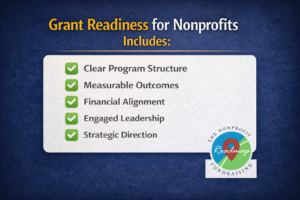
Grant readiness for nonprofits means:
-
Clear program structure
-
Defined and measurable outcomes
-
Financial alignment between budget and request
-
Engaged and aligned leadership
-
Strategic direction guiding funding decisions
When those elements are present, proposals reflect stability and confidence.
Frequently Asked Questions
What is grant readiness for nonprofits?
Grant readiness for nonprofits refers to the internal alignment, systems, financial stability, and program clarity required before applying for funding. It ensures an organization can responsibly manage and report on grant dollars.
Why do grants get rejected before scoring?
Grants are often deprioritized when reviewers detect risk. This may include unclear budgets, undefined outcomes, leadership misalignment, or lack of strategic fit. These readiness gaps can weaken an application before it is fully evaluated.
Is grant writing or grant readiness more important?
Grant readiness is more foundational. Writing communicates your work, but readiness determines whether your organization appears stable, aligned, and capable of delivering results.
How can small nonprofits improve grant readiness?
Small nonprofits can improve grant readiness by clarifying programs, defining measurable outcomes, aligning budgets with strategy, engaging their board, and strengthening internal systems before applying for funding.
Ready to Strengthen Your Grant Readiness?
If you recognize readiness gaps inside your organization, that is not a failure. It is an opportunity.
Grant readiness for nonprofits is not about perfection. It is about alignment. When infrastructure, programs, leadership, and financial systems work together, proposals become stronger naturally.
That is the work we focus on inside LevelUp: Getting Grant Ready on March 10–11.
This live training walks through the foundational elements funders look for before they ever score your proposal. You will leave with clarity on where you stand and what to strengthen next.
If you are ready to stop guessing why grants are rejected and start building real readiness, you can learn more here:
https://www.fundraisingroadmapguide.com/levelup-getting-grant-ready/
We begin March 10.
Stop chasing grants.
Start strengthening your foundation.